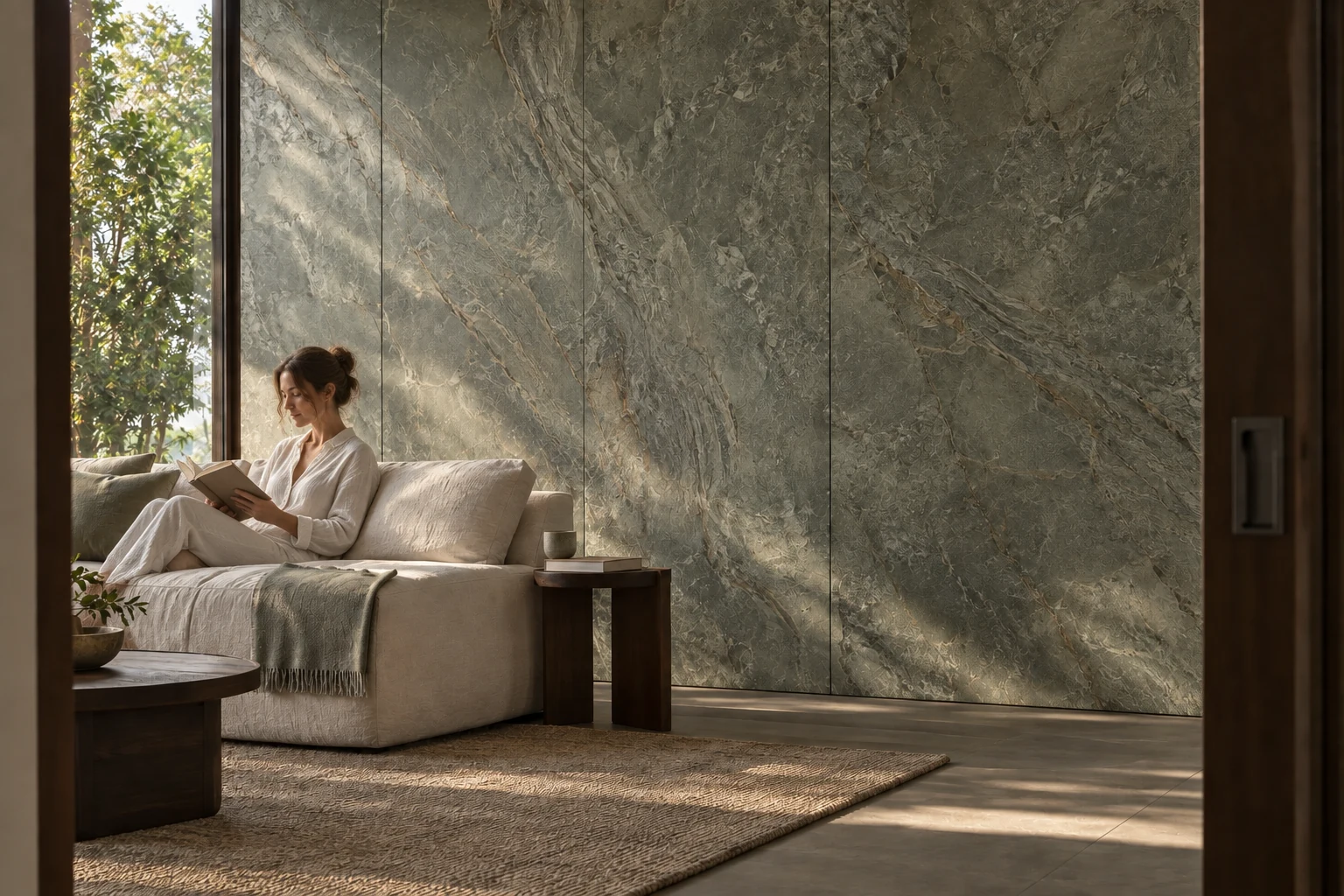
A surface can hold a room.
Not every material needs to be an object. Across a wall, a pattern can become a setting for the softer things around it: a linen seat, a timber detail, the changing shape of daylight.
Consider the scale of a pattern from where you sit as well as up close. Panel boundaries, direction and repetition influence the composition of the room.
Give the pattern some space.
An expressive surface does not need equally expressive surroundings. A restrained palette can leave room for its colour and movement, while a few contrasting textures keep the room from feeling flat.
From room to material.
Bring the wall dimensions, your colour palette and the intended use. These ideas are a starting point for discussing material and layout.